Ditching the AI: Why a Simple Compiler Beats an LLM for Note-Taking
In today’s technology landscape, adding Artificial Intelligence to a product is almost a reflex. Need to draft an email? Ask a chatbot. Want to organize your...
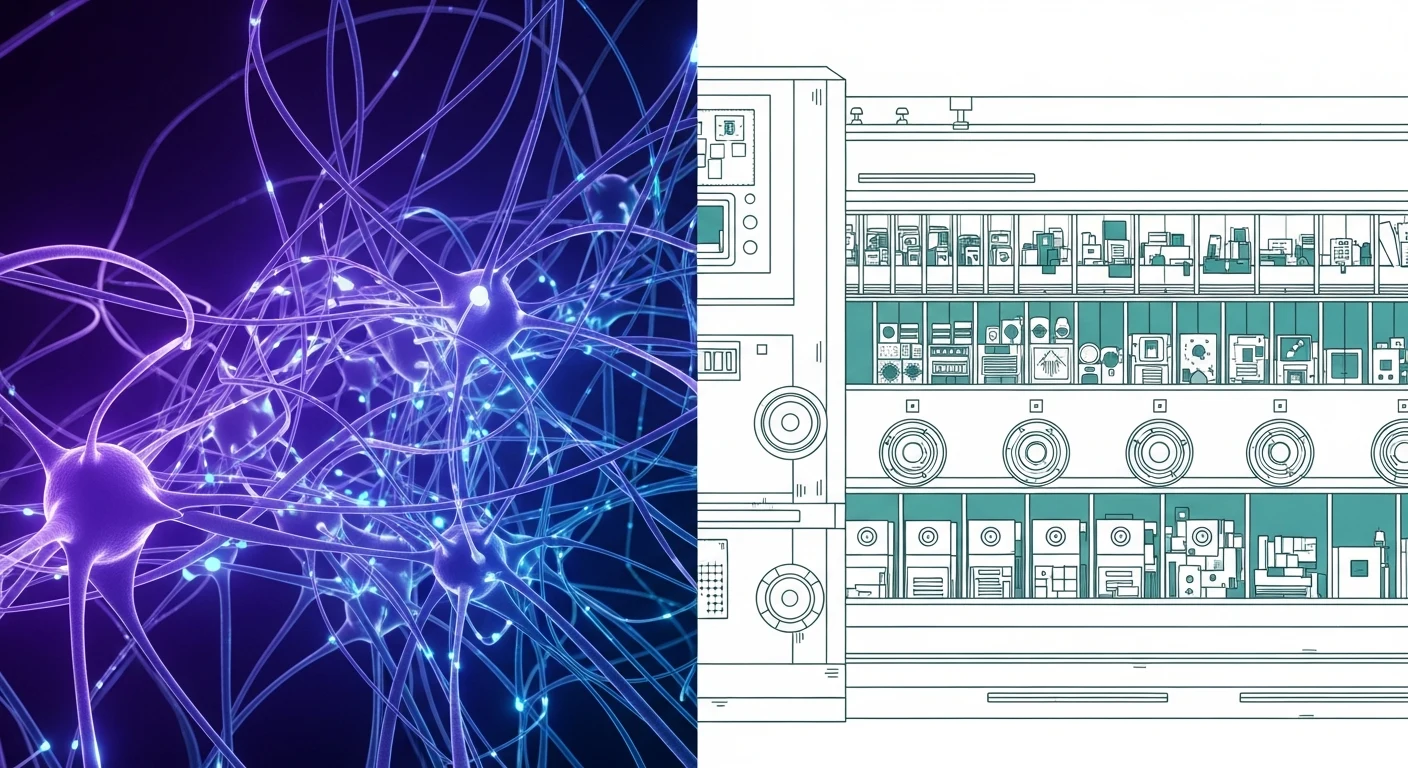
In today’s technology landscape, adding Artificial Intelligence to a product is almost a reflex. Need to draft an email? Ask a chatbot. Want to organize your personal notes? Throw in some vector embeddings, deploy an AI agent, and let a Large Language Model (LLM) sort it out. But as our digital tools become increasingly sophisticated, a quiet rebellion is brewing against what some call "over-engineering."
The trend of "LLM wikis" has recently taken over the productivity space. These systems rely on complex architectures—making repeated calls to AI models to categorize, link, and structure local text files. While it sounds incredibly futuristic to have an AI assistant curate your personal knowledge base, it introduces a host of unnecessary complications into what used to be a very straightforward process.
Recently, a developer shared a refreshing counter-narrative in Towards Data Science. Frustrated by the bloated and unpredictable nature of AI-driven note organizers, they decided to ditch the smart agents entirely. Their solution? A pure Python compiler built exclusively with standard, built-in libraries.
Instead of asking a probabilistic AI model to guess how notes should be connected, this compiler takes a deterministic approach. It reads raw, messy Markdown files and processes them based on strict, predefined rules. It lints the text for errors, generates reliable hyperlinks, and outputs a clean, structured personal wiki. The developer even benchmarked this traditional pipeline across two different operating systems, proving its efficiency and fixing real-world bugs along the way.
This project highlights a crucial distinction that is often lost in the AI hype: the difference between probabilistic and deterministic systems. LLMs are probabilistic; they predict the next most likely word. This makes them fantastic for creative writing, brainstorming, or summarizing complex topics. However, this same trait makes them poorly suited for strict, mechanical tasks like file organization, where a single "hallucinated" link or misunderstood command can break a database.
A traditional compiler, on the other hand, is deterministic. It does exactly what you tell it to do, every single time. It doesn't need an internet connection, it doesn't charge API fees per word, and it processes information in milliseconds rather than seconds.
As we navigate the current AI boom, this developer’s experiment serves as a grounding reminder. Just because we have access to incredibly advanced neural networks doesn't mean we have to use them for everything. For highly creative or ambiguous tasks, LLMs are unparalleled. But for mechanical text organization, the most elegant solution isn't a cutting-edge AI—it’s just a few lines of well-written, old-school code.
Source: Towards Data Science
Key Points
- Many modern note-taking tools use complex AI agents and embeddings, leading to over-engineered solutions.
- A developer successfully replaced their LLM-based wiki with a simple, pure Python compiler.
- The deterministic nature of traditional code makes it more reliable for mechanical tasks than probabilistic AI models.
- Using standard libraries without heavy AI dependencies results in faster, more predictable, and cost-free text organization.
Why It Matters
This highlights the importance of choosing the right tool for the job, reminding us that traditional software often outperforms AI in strict, rule-based tasks.
Sources:
- LLM Wikis Are Over-Engineered — I Replaced Mine With a Pure Python Compiler — Towards Data Science - AI
更多专栏

AI Engineers Microscopic Scissors to Slice Disease-Causing Proteins
The chemical bonds that hold proteins together are remarkably stubborn. Left in ...

The Blank Text Box That Enabled AI Surveillance
When we think of artificial intelligence and privacy, our minds often jump to fa...

Who Inherits Your Secrets When an AI Company Goes Bankrupt?
When a beloved neighborhood bakery closes, they might sell their ovens, display ...