Digital Archaeology: How AI Breathed New Life Into a 1983 Computer Game
If you grew up during the dawn of the personal computing era, you might remember the painstaking ritual of "type-in programs." Before games could be downloaded...
If you grew up during the dawn of the personal computing era, you might remember the painstaking ritual of "type-in programs." Before games could be downloaded in seconds, kids in the 1980s would buy thick paperback books, sit in front of a Commodore 64 or Apple II, and spend hours manually typing hundreds of lines of code just to play a simple text adventure. One missed semicolon meant the game wouldn't run at all.
Today, those old computers are mostly museum pieces, and the programming languages they ran on are relics. But artificial intelligence is emerging as an unexpected tool for digital archaeology, capable of bridging decades of technological evolution in mere seconds.
Recently, the renowned UK publisher Usborne opened its vaults, releasing free PDF archives of its classic 1980s computer books. Among them was a 1983 title called Creepy Computer Games. Developer Simon Willison remembered playing a specific text-based adventure from that book named "Mad House." Instead of hunting down a vintage machine or manually translating the obsolete code into a modern format, he decided to try a different approach: he fed the scanned PDF directly into the AI assistant Claude.
Willison’s instructions to the AI were remarkably simple. He asked Claude to build a modern web application—using standard HTML and JavaScript—that exactly recreated the "Mad House" game. He also requested that the AI make the new version mobile-friendly and apply a suitable retro aesthetic to capture the original vibe.
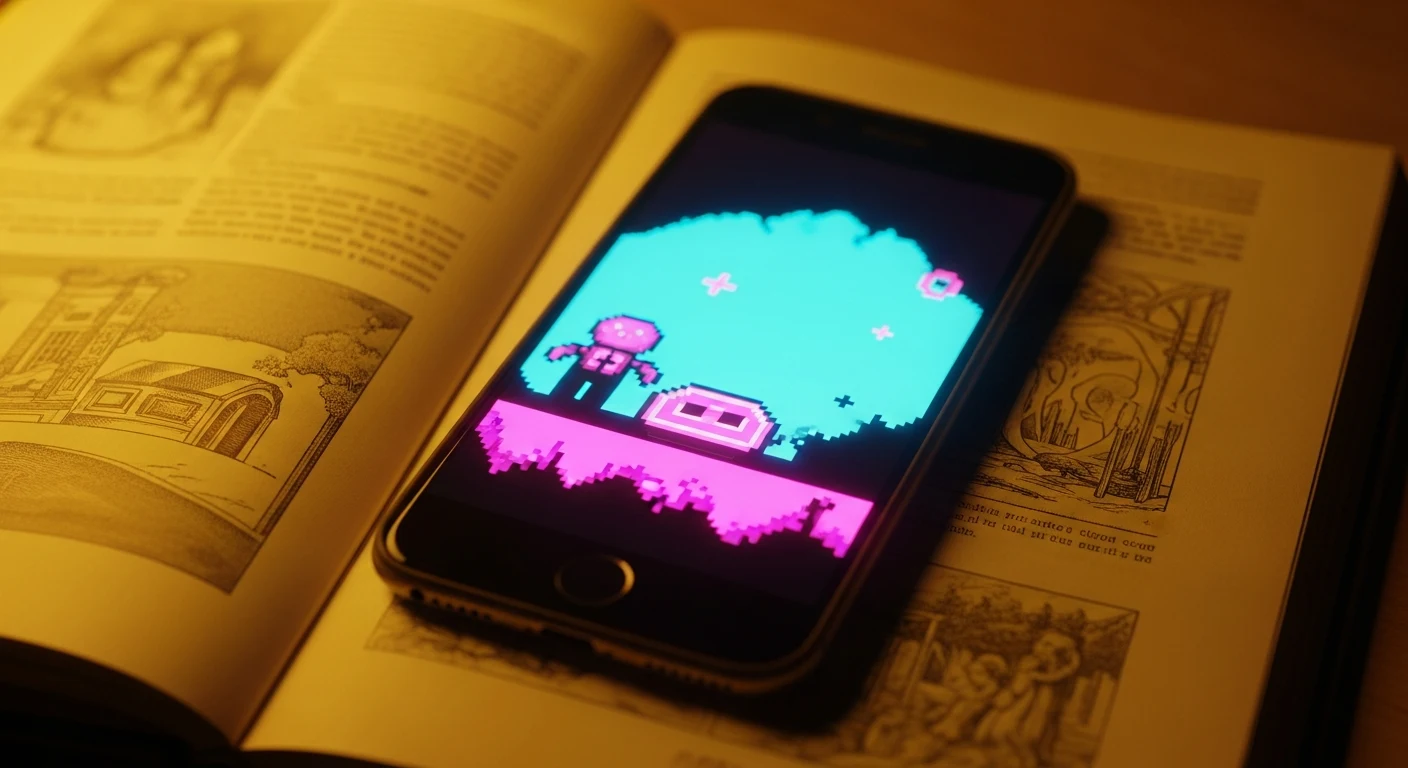
The AI successfully parsed the 40-year-old code from the pages of the PDF and translated it into a fully functional, interactive game that runs seamlessly in a modern web browser. A game that once required hours of manual typing and a bulky CRT monitor was resurrected on a 21st-century smartphone screen with a single prompt.
This experiment is much more than a nostalgic parlor trick; it highlights a profound shift in how we might approach digital preservation and cultural heritage. Historically, updating legacy software or reviving obsolete digital media has been an expensive, labor-intensive process reserved for specialized software engineers. It often requires reverse-engineering dead programming languages and building complex emulators.
AI, however, acts as a universal translator across time. It can look at the logic of a program written in 1983 and instantly map it onto the programming frameworks of today. For the general public, this means that the barrier to interacting with digital history is disappearing.
Ultimately, technology is often blamed for making our devices obsolete and leaving our digital memories behind. Yet, as this retro gaming revival shows, the latest advancements in AI might just be the key to unlocking our past, turning forgotten archives into living, playable experiences once again.
Key Points
- In the 1980s, computer games were often distributed as printed code in books that users had to type manually.
- UK publisher Usborne recently released free PDFs of their classic 1980s coding books.
- A developer used the AI tool Claude to process a PDF of a 1983 book and recreate a game called 'Mad House'.
- The AI instantly translated the 40-year-old code into a modern, mobile-friendly web game.
- This highlights AI's potential as a powerful, accessible tool for digital preservation and cultural archiving.
Why It Matters
This demonstrates that AI can act as a bridge across technological generations, democratizing digital preservation and allowing anyone to revive obsolete media.
Sources:
- Mad House — Usborne Creepy Computer Games — Simon Willison's Weblog
更多专栏

The Clumsy Intern: When AI Agents Accidentally Apply for Visas
We usually worry about artificial intelligence becoming too smart or harboring m...

The Drone Air Traffic Controllers Guarding Our Skies
Imagine an ice cream cake plummeting toward a suburban Texas sidewalk. That is e...

The AI Tool Turning Airbnb Photos Into a Police Map
For years, the internet has been quietly accumulating a massive visual catalog o...