The Neo-Luddites of Tompkins Square Park
In the shadow of a booming artificial intelligence industry that demands massive, power-hungry data centers, a distinctly low-tech gathering has taken root in...
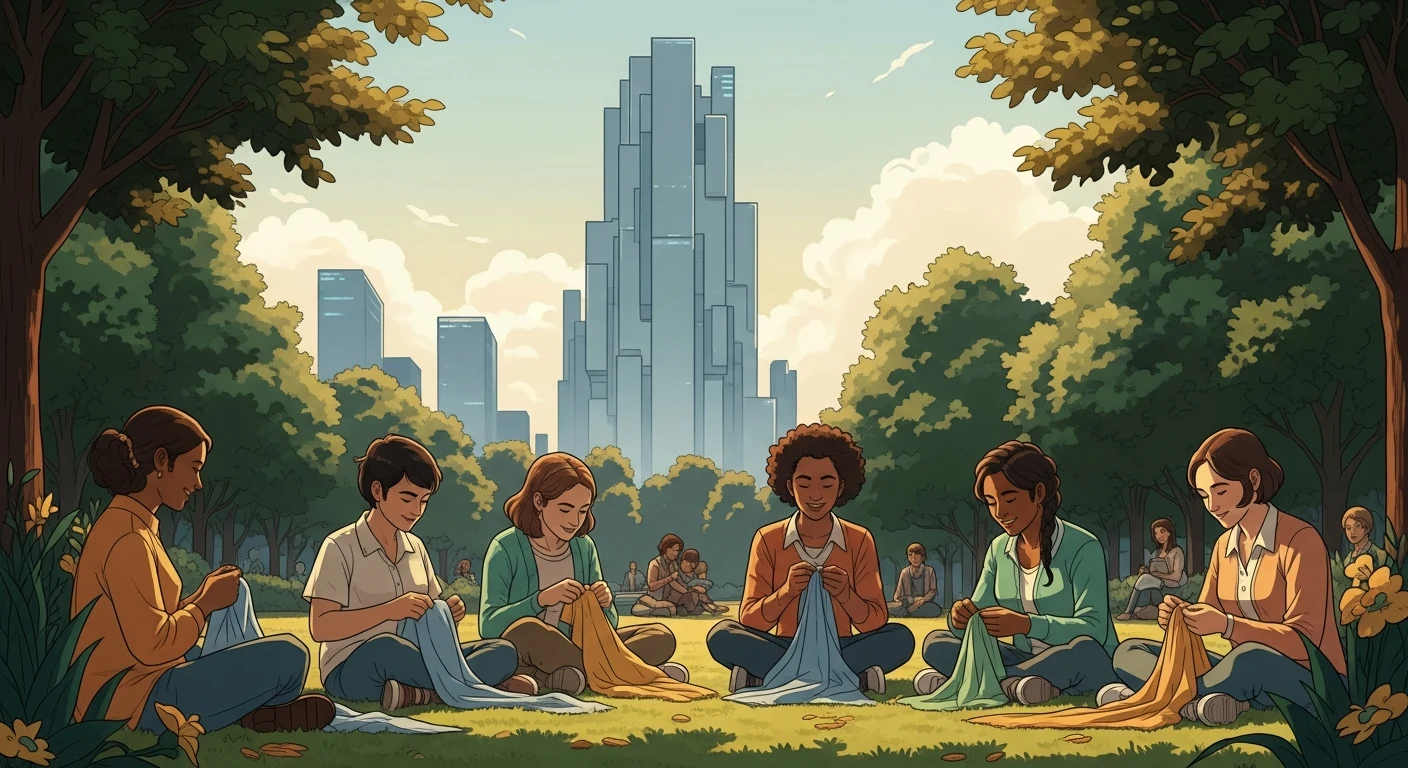
In the shadow of a booming artificial intelligence industry that demands massive, power-hungry data centers, a distinctly low-tech gathering has taken root in New York City. It features giant papier-mâché sculptures, needle and thread, and a radical proposition: learning how to talk to each other without a screen in the way.
This is the "Summer of Ludd," a weeklong festival held in the East Village’s Tompkins Square Park. Drawing hundreds of attendees—largely from Generation Z—the event serves as a physical sanctuary from the relentless pace of the digital economy. The festival opened with "Luddite Recreations," a theatrical performance recounting the history of 19th-century English artisans who fiercely resisted the industrial machines that threatened their livelihoods.
Historically, the term "Luddite" has been used as a pejorative to describe someone who stubbornly fears progress. However, today’s youth are reclaiming the label. Much like the original textile workers who weren't necessarily opposed to machines but rather to the exploitative labor practices they enabled, this new generation is pushing back against the specific ways Big Tech companies deploy technology to monopolize attention and isolate individuals.
The festival’s itinerary is a testament to this philosophy. Workshops skip coding and digital networking in favor of highly tactile, interpersonal skills. Attendees gather to learn the lost art of mending clothes, practice flirting and dating entirely offline, and discuss strategies for resisting the construction of new data centers in their communities.
This last point is particularly telling. While AI and cloud computing are often marketed as ethereal, invisible forces, the modern Luddite movement recognizes their heavy physical footprint. By organizing against data centers, these young activists are drawing a direct line between the algorithms that govern their social media feeds and the industrial infrastructure that consumes vast amounts of local electricity and land.
The emergence of the Summer of Ludd highlights a growing cultural fatigue with the hyper-connected lifestyle. As artificial intelligence continues to automate creative and administrative tasks, and as digital platforms increasingly mediate human relationships, a counter-culture is inevitably rising. These young participants aren't attempting to smash the internet with a hammer; rather, they are deliberately withdrawing their most valuable resource—their attention.
Ultimately, this movement poses a crucial question for the tech industry and society at large. As we build increasingly sophisticated digital worlds, how do we ensure we don't inadvertently dismantle our physical ones? The answer, at least for a few hundred people in a New York park, starts with putting the phone away and simply saying hello to the person sitting next to them.
Key Points
- The 'Summer of Ludd' in NYC is a weeklong festival encouraging Gen Z to disconnect from smartphones.
- Activities range from a play about historical Luddites to workshops on offline dating and clothes mending.
- Participants are organizing against data centers, highlighting the physical and environmental toll of the AI boom.
- The movement reclaims the 'Luddite' label not as anti-progress, but as a defense of human connection against Big Tech exploitation.
Why It Matters
As AI and digital platforms increasingly mediate our lives, this grassroots movement signals a growing desire among digital natives to reclaim their attention and rebuild tangible, offline communities.
Sources:
- Inside the Luddite festival harnessing Gen Z’s rage against Big Tech — Ars Technica AI
更多专栏

Taking the Wheel: How Facebook Wants You to Train Its Algorithm
Imagine being at a party where the DJ is locked in a soundproof booth. They watc...
The AI Detective: How OpenAI Caught an Insider Threat
Corporate espionage usually conjures images of hidden cameras, shadowy informant...

Your App Store is Becoming a Personal AI Concierge
For over a decade, app stores have functioned like massive, somewhat rigid digit...