OpenAI's First Hardware is a Glowing Dashboard for AI Agents
For years, our interaction with OpenAI's technology has been strictly confined to the digital realm—typing prompts into web browsers or integrating APIs into...
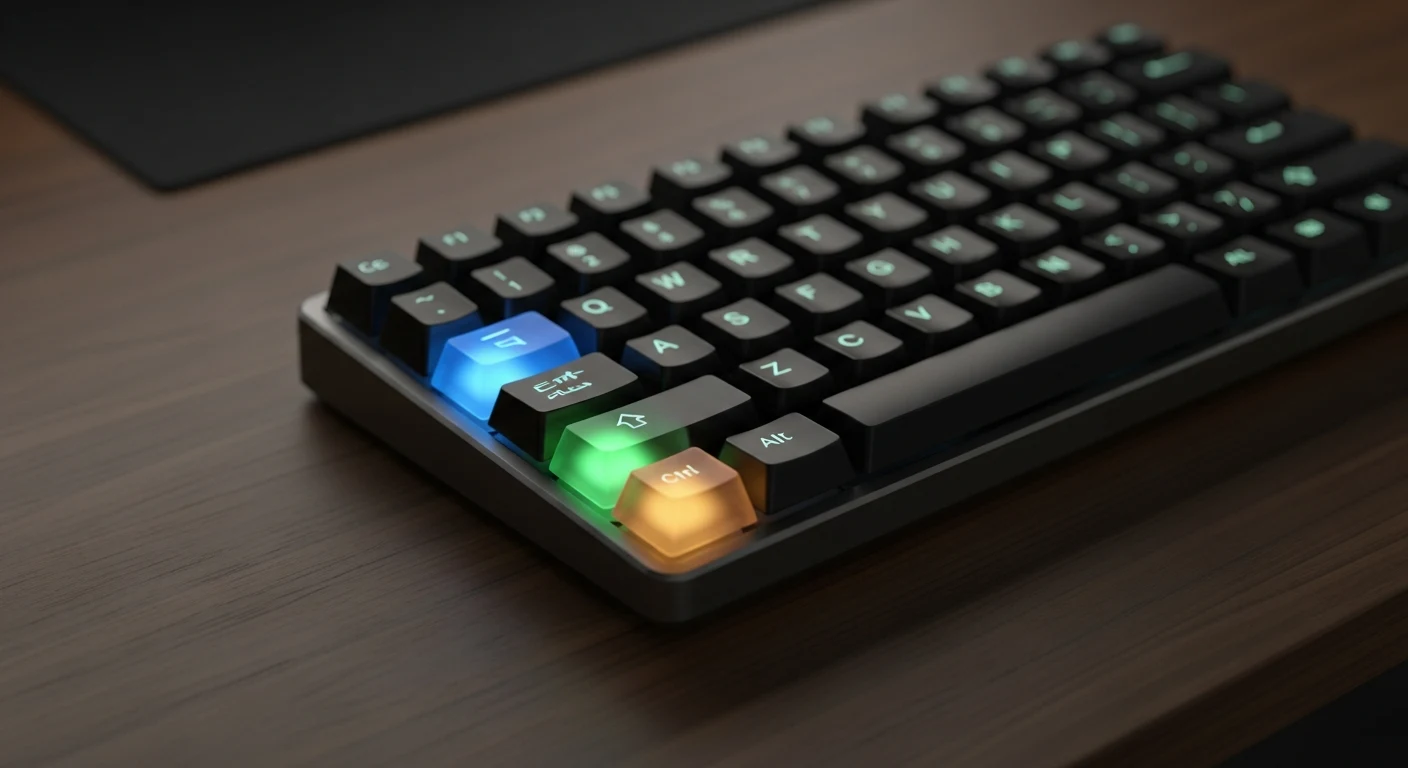
For years, our interaction with OpenAI's technology has been strictly confined to the digital realm—typing prompts into web browsers or integrating APIs into software. But what happens when the world’s most famous AI company decides to build something you can actually touch? The answer isn't a sci-fi humanoid robot or a futuristic smart visor. It’s a $230 glowing mini-keyboard called the Codex Micro.
Created in a limited-run collaboration with boutique hardware maker Work Louder, the Codex Micro is OpenAI’s first official foray into branded physical devices. At first glance, it looks like a stylish, square macro-pad favored by video editors or digital artists. However, its true purpose lies in the top two rows, which feature six frosted, RGB-illuminated keys. These aren't for typing letters; they are a physical dashboard for managing your own personal workforce of AI agents.
As artificial intelligence evolves from simple chatbots into autonomous agents capable of running complex tasks in the background, keeping track of what the AI is doing has become a new kind of chore. The Codex Micro solves this by bringing AI status updates into your peripheral vision.
Imagine you have multiple Codex threads running simultaneously—one debugging a script, another analyzing a dataset. Instead of cluttering your screen with multiple windows, you simply look at your keyboard. A white light means an agent is idle. A pulsing blue light indicates the AI is actively "thinking" and processing its task, which turns to a satisfying green when the job is done.
Most importantly, the keyboard acts as a physical bridge for human-in-the-loop collaboration. If an agent hits a roadblock and needs a human decision to proceed, the key flashes amber. If it encounters a critical error, it turns red. A quick tap on the glowing key instantly snaps the relevant AI thread onto your screen, allowing you to intervene, correct the course, and send the AI back to work.
While the Codex Micro might seem like a niche gadget for power users, it represents a fascinating shift in human-computer interaction. It acknowledges that as AI becomes more capable of working independently, we need better, more intuitive ways to supervise it. By giving software a physical presence on our desks, OpenAI is hinting at a future where interacting with artificial intelligence feels less like operating a computer program, and more like managing a team of digital colleagues.
Key Points
- OpenAI has released its first branded hardware, the $230 Codex Micro mini-keyboard.
- Built with Work Louder, the device features six frosted keys to track up to six AI agents.
- The keys change color to indicate AI status, such as blue for processing or amber when human input is required.
- Pressing a key instantly summons the specific AI agent's window to the user's screen.
- The device highlights a shift toward physical interfaces designed to manage autonomous AI workflows.
Why It Matters
As AI shifts from conversational chatbots to autonomous agents working in the background, hardware like the Codex Micro provides a necessary physical bridge for humans to seamlessly monitor and guide their digital assistants.
Sources:
- OpenAI's first branded hardware is... a light-up keyboard? — Ars Technica AI
更多专栏

Taking the Wheel: How Facebook Wants You to Train Its Algorithm
Imagine being at a party where the DJ is locked in a soundproof booth. They watc...

The AI Detective: How OpenAI Caught an Insider Threat
Corporate espionage usually conjures images of hidden cameras, shadowy informant...

Your App Store is Becoming a Personal AI Concierge
For over a decade, app stores have functioned like massive, somewhat rigid digit...