The Surgeon's New Avatar: Humanoid Robots Enter the Operating Room
When we picture robotic surgery, we usually imagine massive, multi-armed machines that dominate an entire operating room and cost millions of dollars to...
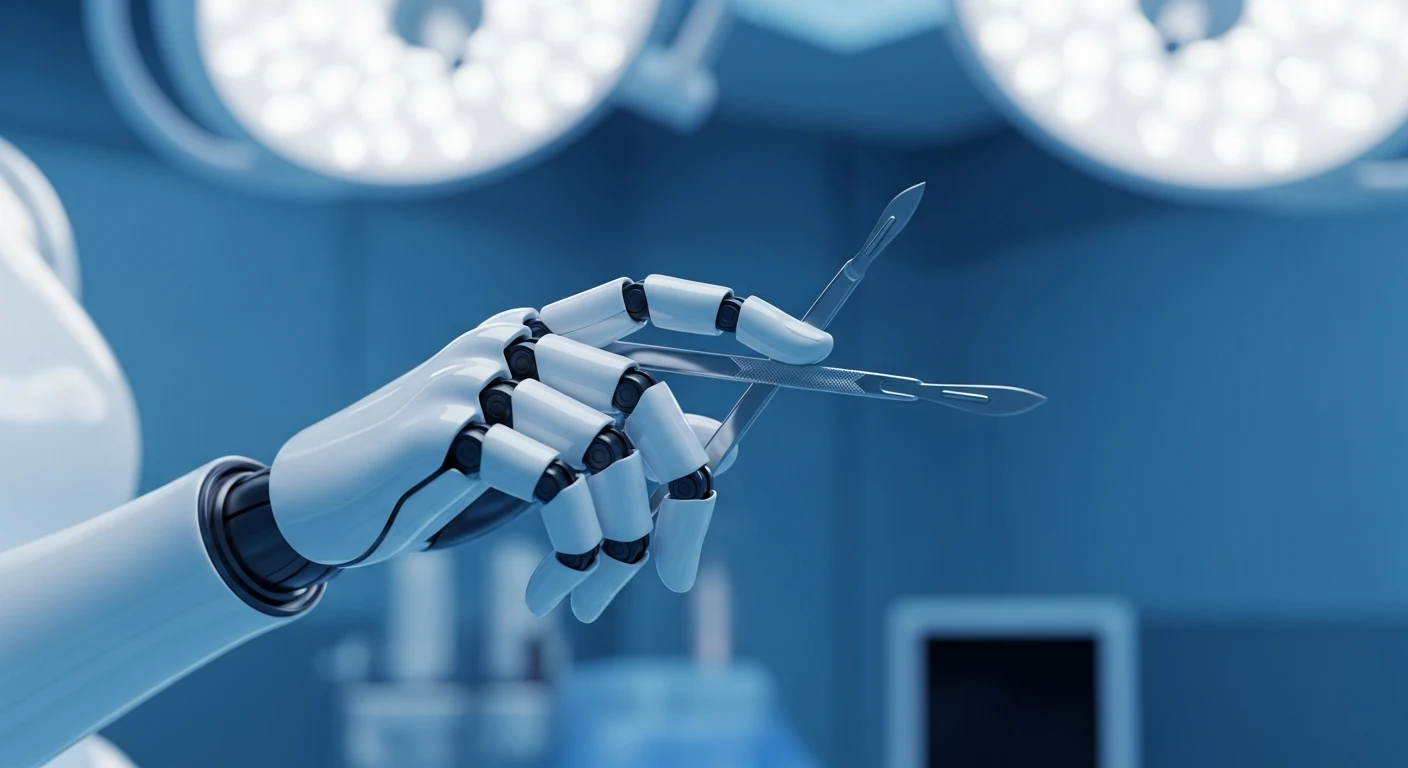
When we picture robotic surgery, we usually imagine massive, multi-armed machines that dominate an entire operating room and cost millions of dollars to install. But a recent medical breakthrough points to a much leaner, more versatile future: a humanoid robot acting as a surgeon's remote-controlled avatar.
In an unprecedented preclinical trial recently published in the journal Nature, teleoperated humanoid robots successfully performed minimally invasive surgeries, removing the gallbladders of live pigs. The most crucial detail of this experiment is what the robots didn't do: they didn't think for themselves. Rather than acting as autonomous AI doctors replacing human expertise, these machines served as highly precise physical extensions of skilled human surgeons who controlled their movements from afar.
This distinction is vital. The goal isn't to remove the human from the loop, but to remove the geographic barriers that separate patients from top-tier medical care.
Dr. Shanglei Liu, an assistant professor of surgery at the University of California San Diego School of Medicine, highlighted the transformative economics of this approach. Traditional robotic-assisted surgical systems are extraordinary tools, but their immense cost and spatial footprint restrict them to major, well-funded medical centers. In contrast, a humanoid robot requires a fraction of the cost and takes up significantly less space.
This dramatic reduction in size and expense changes the equation for medical accessibility. Imagine a small clinic in a rural community that cannot afford a multi-million-dollar surgical suite. By deploying a relatively inexpensive humanoid robot, that clinic could allow a specialist in a major metropolitan hospital to log in and perform a complex, life-saving procedure remotely.
Beyond rural healthcare, the flexibility of these humanoid systems makes them ideal for extreme environments where deploying a full surgical team is impossible. Researchers envision a future where these robotic avatars are stationed in frontline military field hospitals, disaster relief zones, and even orbiting space stations, waiting for a human doctor on Earth to take the reins.
While we are still in the preclinical stages, this successful animal trial proves that the concept works. It offers a reassuring vision of our AI-assisted future—one where technology doesn't replace human skill, but amplifies it, projecting care to wherever it is needed most.
Key Points
- Humanoid robots successfully performed minimally invasive gallbladder removals on live pigs in a preclinical trial.
- The robots were not autonomous; they were teleoperated, precisely mirroring the movements of human surgeons.
- These systems are significantly smaller and cheaper than traditional surgical robots, making them easier to deploy.
- The technology could eventually bring specialist surgical care to rural clinics, battlefields, and space stations.
Why It Matters
By drastically reducing the cost and size of surgical robotics, this technology could make life-saving, specialist surgical care accessible in remote and under-resourced areas globally.
Sources:
更多专栏

Taking the Wheel: How Facebook Wants You to Train Its Algorithm
Imagine being at a party where the DJ is locked in a soundproof booth. They watc...

The AI Detective: How OpenAI Caught an Insider Threat
Corporate espionage usually conjures images of hidden cameras, shadowy informant...

Your App Store is Becoming a Personal AI Concierge
For over a decade, app stores have functioned like massive, somewhat rigid digit...