The Cloud's Heavy Footprint: AI's Hidden Toll on Heavy Industry
When we think of artificial intelligence, we often imagine weightless algorithms, seamless code, and infinite cloud storage. But the "cloud" is actually...
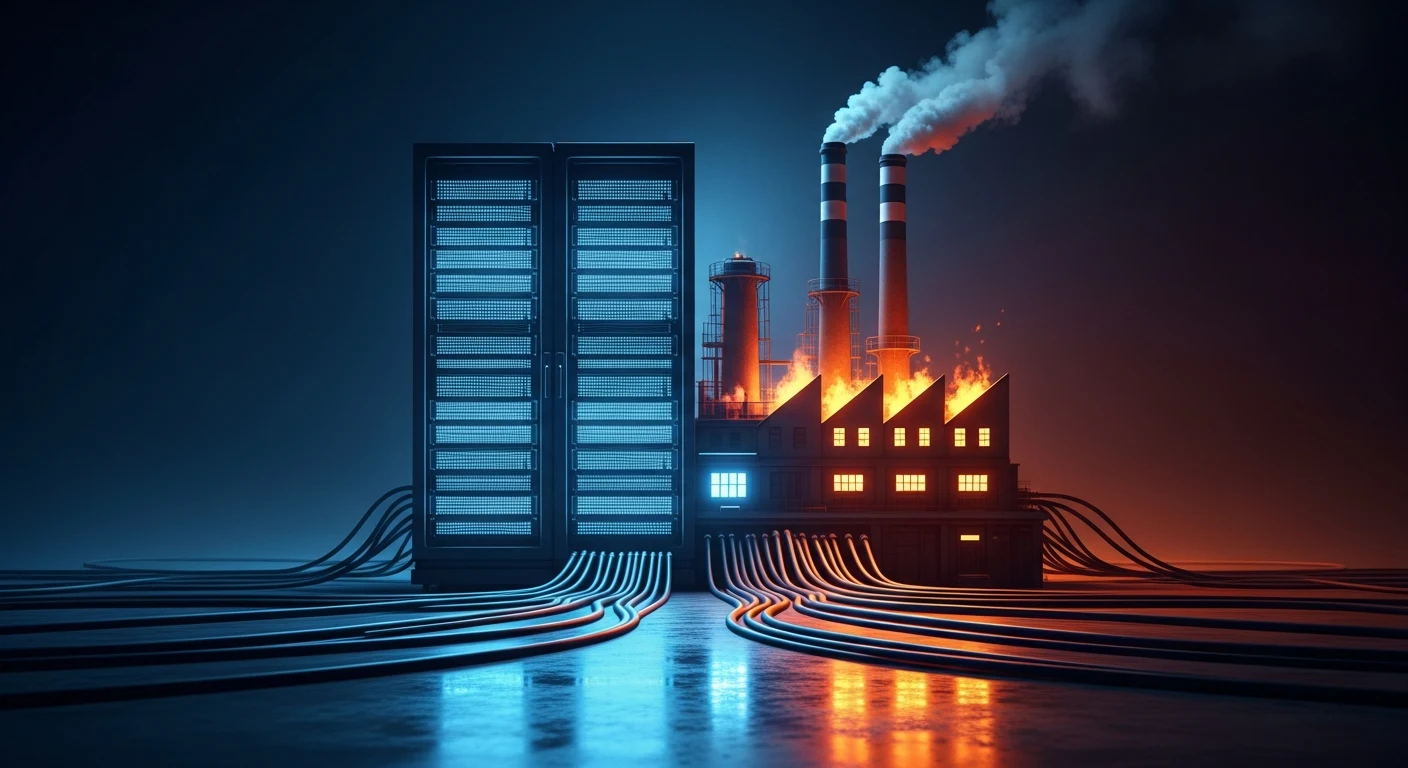
When we think of artificial intelligence, we often imagine weightless algorithms, seamless code, and infinite cloud storage. But the "cloud" is actually grounded in massive, hyper-active server farms—and these physical facilities are incredibly hungry for electricity. So hungry, in fact, that they are beginning to outcompete traditional heavy industry for basic power resources.
In the industrial heartland of the United States, the AI boom is creating a tangible economic friction. The surging energy demand from new data centers is severely straining PJM Interconnection, the largest power grid operator in the country, which serves 13 states. As the grid struggles to accommodate this massive new load, electricity rates are spiking. And according to recent analyses, factory electricity bills are rising at a faster clip than those of residential or other commercial customers.
The impact on the ground is stark. Take the Belden Brick Company, a 141-year-old manufacturer in Ohio. Recently, the company saw its monthly capacity charge rocket from $1,600 to a staggering $12,000. Meanwhile, the Steel Manufacturers Association has warned that steel companies concentrated in the Rust Belt are now paying tens of millions of dollars more per year for power. When electricity accounts for 20 to 40 percent of the total cost of making steel, a sudden rate hike isn't just an inconvenience—it's a direct threat to a company's survival.
This dynamic creates a fascinating, and highly consequential, policy paradox. President Donald Trump’s economic agenda has heavily promoted a "Made in America" renaissance, aiming to bring manufacturing jobs back to the Rust Belt. Simultaneously, the administration has championed the tech giants driving the AI revolution, viewing AI dominance as a critical national interest. Yet, on the actual power grid, these two major initiatives are cannibalizing each other. The very tech boom meant to secure the future economy is pricing the factories of the present out of the market.
The situation highlights a critical reality of the digital age: AI is not just a software revolution; it is an infrastructure challenge. As we transition to an AI-driven economy, figuring out how to power the future without unplugging the industries we still rely on will be one of the most pressing hurdles to overcome.
Key Points
- Massive energy demands from AI data centers are straining the US power grid, particularly in the 13-state PJM Interconnection region.
- Industrial electricity costs are rising faster than residential rates, squeezing profit margins for traditional manufacturers.
- Heavy industries are severely impacted; electricity makes up 20% to 40% of steel production costs.
- The energy conflict creates a paradox between national goals to revive traditional manufacturing and the push for AI tech dominance.
Why It Matters
The AI boom is colliding with physical infrastructure limits, creating unexpected economic friction between next-generation technology and traditional manufacturing sectors.
Sources:
- Data centers’ energy demand threatens Trump’s “Made in America” plan — Ars Technica AI
更多专栏

Taking the Wheel: How Facebook Wants You to Train Its Algorithm
Imagine being at a party where the DJ is locked in a soundproof booth. They watc...

The AI Detective: How OpenAI Caught an Insider Threat
Corporate espionage usually conjures images of hidden cameras, shadowy informant...

Your App Store is Becoming a Personal AI Concierge
For over a decade, app stores have functioned like massive, somewhat rigid digit...