The Nobel Laureate and the Coding Crisis
There is a profound irony at the heart of Google’s AI division right now: the same company that won a Nobel Prize for solving one of biology’s grandest...
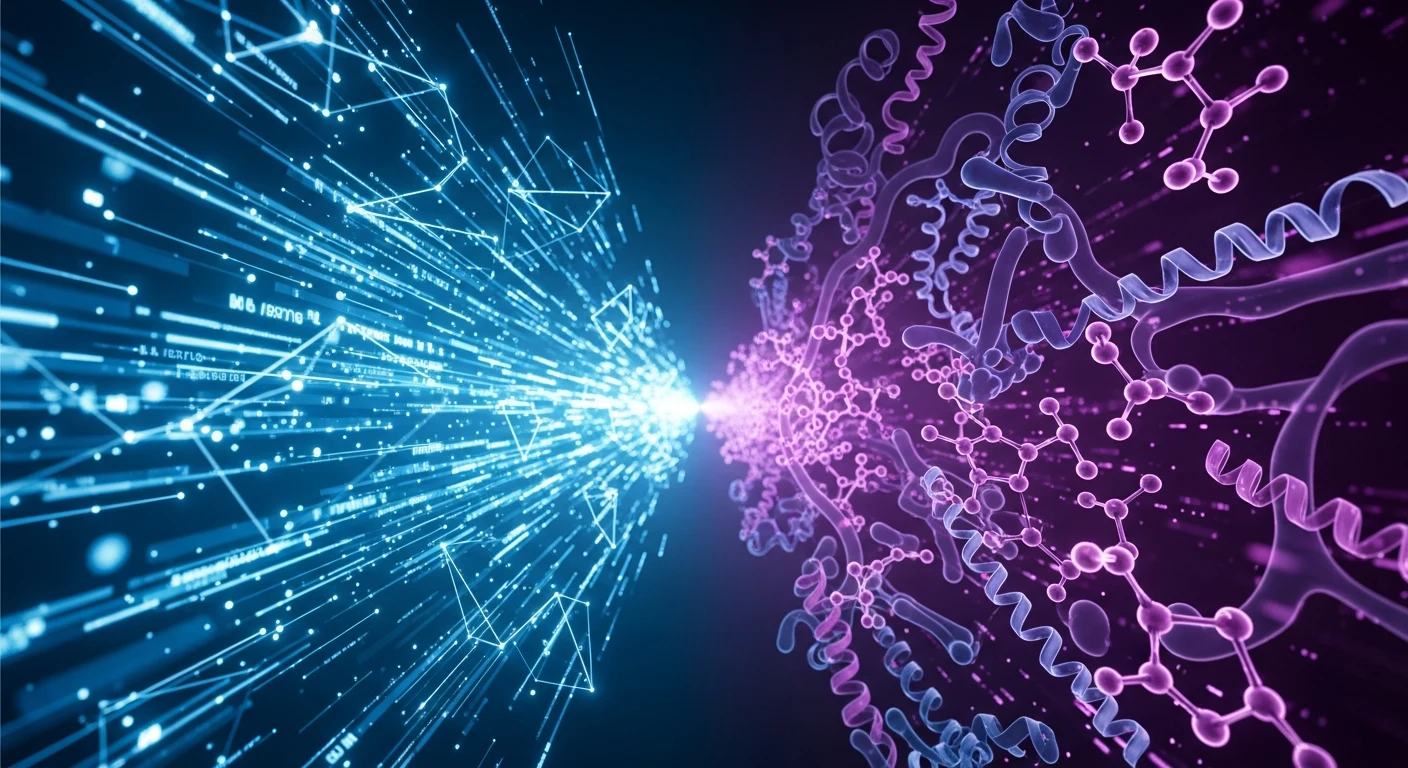
There is a profound irony at the heart of Google’s AI division right now: the same company that won a Nobel Prize for solving one of biology’s grandest challenges is currently struggling to build the best AI coding assistant for its own software engineers.
As the Google I/O developer conference kicks off, the landscape of the foundation model race has shifted dramatically. Just a year ago, following the launch of Gemini 2.5 Pro, the differences between the top-tier AI models felt like splitting hairs. Today, coding capabilities have become the ultimate litmus test for AI supremacy, and Google finds itself in a clear third place. Anthropic’s Claude Code and OpenAI’s Codex have proven so superior that Google reportedly allowed some of its own DeepMind engineers to use Claude just to keep pace.
To claw its way back to the frontier, Google is deploying its heaviest hitters. The company has spun up a new AI coding team at DeepMind, tapping the talents of John Jumper—who shared a Nobel Prize in chemistry with CEO Demis Hassabis for their work on AlphaFold. Industry watchers are highly anticipating a major update to Google’s agentic coding platform, Antigravity, though catching up to rivals overnight will be a monumental task.
Yet, evaluating Google solely on its coding deficit misses the broader picture. Where Google trails in software engineering, it dominates in scientific discovery. As the only frontier AI lab with a Nobel laureate, Google has spent the past year releasing groundbreaking tools like AI co-scientist, which acts as a research partner to formulate hypotheses, and AlphaEvolve, a system designed to discover novel solutions to complex computational problems.
This divergence in strategy is also evident in health AI. While OpenAI aggressively captured the medical AI narrative with the release of ChatGPT Health, Google is taking a noticeably more cautious route. Its newly announced AI-powered Health Coach focuses strictly on wellness, fitness, and diet, avoiding the high-stakes realm of medical diagnostics.
All of this unfolds against a backdrop of intense Silicon Valley drama. While the tech world watches the Elon Musk v. Sam Altman trial wrap up and debates controversial Department of Defense contracts—a DoD deal recently sparked a 600-employee protest within Google itself—DeepMind’s Hassabis continues to cultivate the quiet persona of a science-first nerd. For Google, the path forward isn't just about winning a coding arms race; it's about proving that a foundation built on rigorous science can outlast the hype.
Key Points
- Google currently trails OpenAI and Anthropic in the foundation model race, largely due to inferior AI coding tools.
- DeepMind has formed a new coding team, bringing in Nobel laureate John Jumper to help close the gap.
- Despite coding struggles, Google remains the undisputed leader in scientific AI with tools like AI co-scientist.
- Google is taking a cautious approach to health AI, focusing on wellness rather than diagnostic medicine.
Why It Matters
Google's struggle in AI coding versus its dominance in scientific AI highlights a shifting industry landscape where specialized capabilities matter more than general model size.
Sources:
- What to expect from Google this week — MIT Technology Review - AI
更多专栏
The Clumsy Intern: When AI Agents Accidentally Apply for Visas
We usually worry about artificial intelligence becoming too smart or harboring m...
The Drone Air Traffic Controllers Guarding Our Skies
Imagine an ice cream cake plummeting toward a suburban Texas sidewalk. That is e...
The AI Tool Turning Airbnb Photos Into a Police Map
For years, the internet has been quietly accumulating a massive visual catalog o...