Great Hardware, Unfinished AI: Google's Smart Home Dilemma
For the better part of a decade, smart speakers have occupied a strange space in our homes. They sit on kitchen counters and bedside tables, faithfully setting...
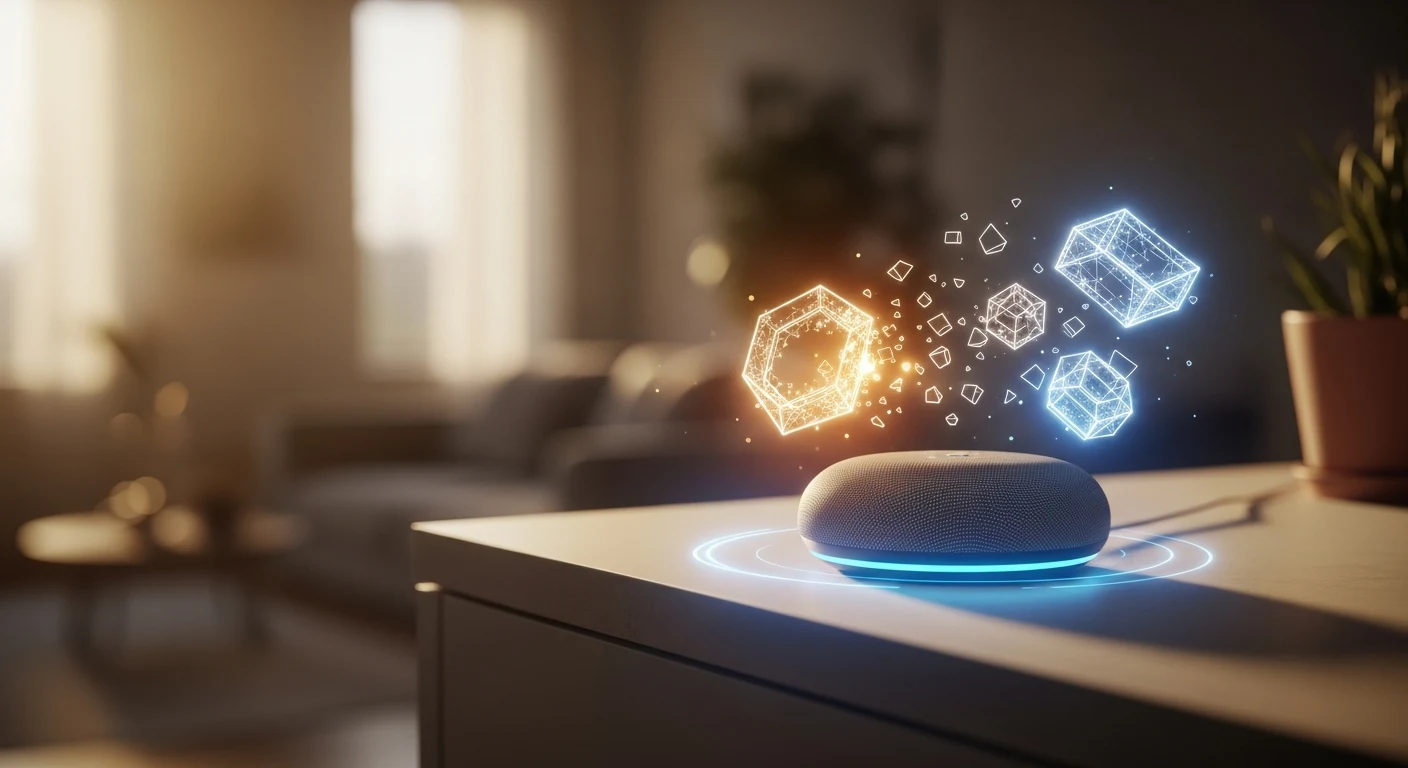
For the better part of a decade, smart speakers have occupied a strange space in our homes. They sit on kitchen counters and bedside tables, faithfully setting timers, reporting the weather, and playing background music. Yet, despite their initial promise, they rarely evolved beyond these basic utility tasks. The generative AI boom promised a much-needed second act for these devices, envisioning them as proactive, conversational household managers.
Google recently attempted to deliver on this promise by launching the new Google Home Speaker, its first major smart speaker hardware in six years. Designed specifically with its flagship AI, Gemini, in mind, the device boasts an elegant physical design that looks great in a modern living space. But while the hardware is undeniably ready for prime time, the "brain" inside tells a different story. Early impressions reveal that Gemini for Home still feels unfinished, struggling to meet the nuanced demands of managing a smart household.
Google isn't alone in this pursuit. Last fall, Amazon also debuted new hardware aimed at leveraging a revamped Alexa. The entire tech industry is racing to figure out how to make these devices essential rather than just novel. However, this collective struggle highlights a fascinating challenge in the current AI landscape. We are used to seeing large language models excel in purely digital environments—drafting emails, summarizing reports, or generating code on a laptop screen. Transplanting that intelligence into a physical space is remarkably difficult.
A smart home assistant doesn’t just need to generate coherent text; it needs to understand physical context. It must navigate a fragmented ecosystem of smart lights, thermostats, and locks, and interpret human commands that are often messy, colloquial, or context-dependent. When you ask a cloud-based chatbot a question, a slightly off-target answer is a minor inconvenience. When you ask a smart speaker to turn off the lights and lock the doors before bed, a failure to execute is incredibly frustrating. The transition from a conversational "chatbot" to an action-oriented "agent" requires a level of reliability and spatial awareness that current models are still developing.
Google’s latest release serves as a valuable reality check for AI enthusiasts. It proves that building beautiful, capable hardware is a solved problem, but creating an AI that seamlessly integrates into the daily rhythms of our physical lives remains a work in progress. The future of the smart home is undoubtedly intelligent, but for now, our futuristic speakers are still learning how to be truly helpful.
Key Points
- Google released its first new smart speaker in six years, explicitly built for the Gemini AI.
- While the physical hardware is well-designed, the Gemini software struggles with smart home management.
- The industry is finding it difficult to transition AI from digital text generation to reliable physical world execution.
- Smart home environments require a level of spatial awareness and reliability that conversational AI models have yet to master.
Why It Matters
This highlights the significant gap between a cloud-based conversational AI and a practical, context-aware home assistant, setting realistic expectations for consumer AI hardware.
Sources:
- Google built a great smart speaker, but Gemini isn’t ready for it — The Verge - AI
更多专栏

Taking the Wheel: How Facebook Wants You to Train Its Algorithm
Imagine being at a party where the DJ is locked in a soundproof booth. They watc...

The AI Detective: How OpenAI Caught an Insider Threat
Corporate espionage usually conjures images of hidden cameras, shadowy informant...

Your App Store is Becoming a Personal AI Concierge
For over a decade, app stores have functioned like massive, somewhat rigid digit...