When AI Learns Our Biases: The Gender Divide in Algorithms
We often perceive artificial intelligence as a bastion of objectivity, a neutral arbiter processing data without prejudice. Yet, this perception overlooks a...
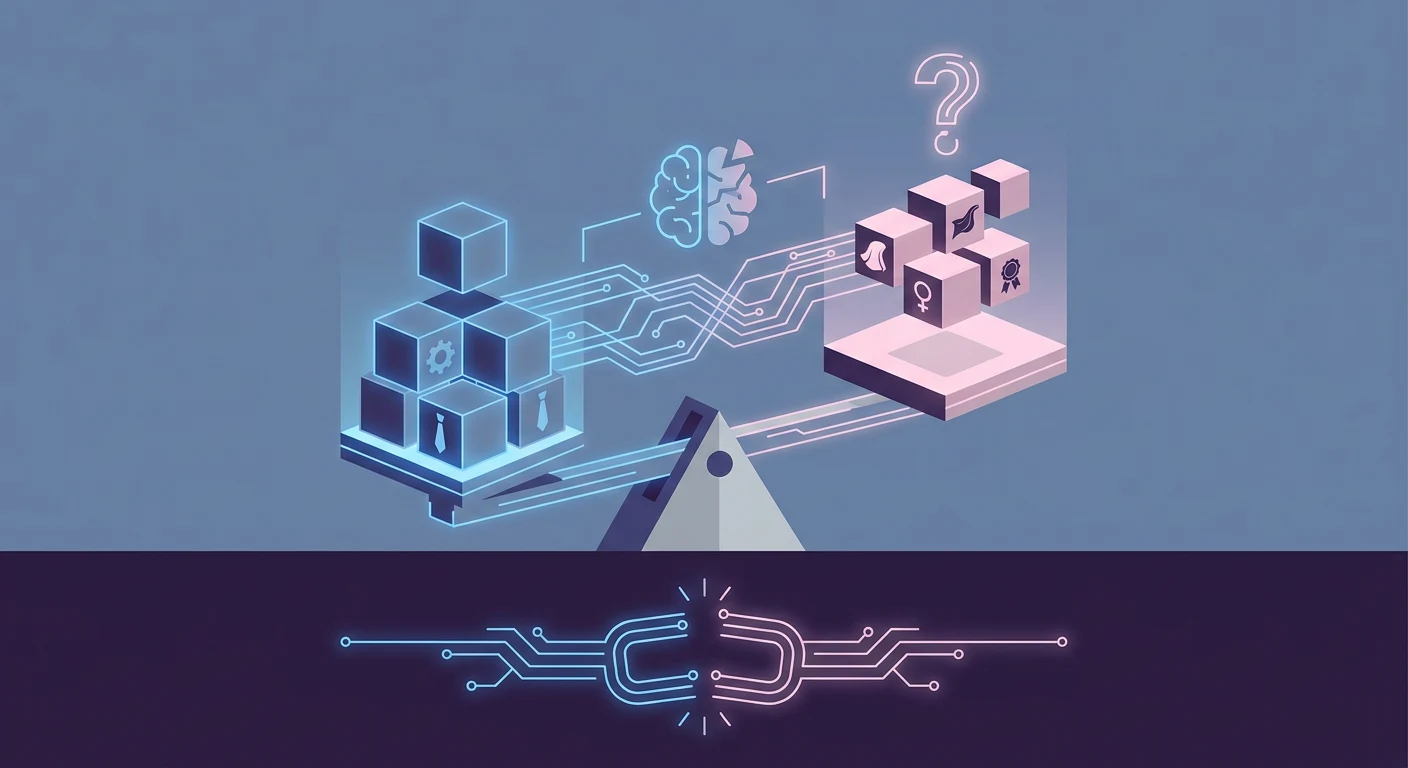
We often perceive artificial intelligence as a bastion of objectivity, a neutral arbiter processing data without prejudice. Yet, this perception overlooks a critical truth: AI systems learn from human-created data, and as such, they inevitably absorb the biases ingrained within our society, including those related to gender. When AI is trained on such data, it doesn't just reflect these biases; it can amplify them, leading to outcomes that are anything but neutral.
Consider the subtle ways this bias manifests. Early research from 2016, for instance, revealed how word embedding models—the numerical representations of words that AI uses to understand language—could carry gender stereotypes. Trained on vast amounts of text data, like Google News articles, these models would make associations such as "man is to computer programmer as woman is to homemaker," or "father is to doctor as mother is to nurse." These are not just linguistic curiosities; they are mathematical reflections of societal stereotypes, embedded deep within the AI's understanding of the world. The concern is that if such biased word embeddings are used in downstream applications like sentiment analysis or document ranking, they could subtly perpetuate and amplify these stereotypes across various digital interactions.
The problem extends beyond language. In the realm of facial recognition, a landmark study from 2018 exposed a more complex issue known as "intersectional bias." Researchers found that commercial facial recognition systems performed significantly worse on certain demographic groups. Specifically, these systems exhibited far lower accuracy when identifying darker-skinned females, with error rates soaring up to 34.7%. In stark contrast, the maximum error rate for lighter-skinned males was a mere 0.8%. This disparity highlights how AI's biases are not always one-dimensional; they can compound when multiple characteristics, such as gender and race, intersect, leading to dramatically unequal technological experiences.
The good news is that these biases are not insurmountable. The scientific community and tech industry are actively working to address them. For word embeddings, researchers have developed debiasing algorithms designed to reduce stereotypical associations while preserving useful ones. In response to the findings on facial recognition, companies like Microsoft and IBM made concerted efforts to improve their systems. This involved revising and expanding their training datasets to include a much more diverse array of individuals, encompassing various skin tones, genders, and ages, aiming for more equitable performance across all user groups.
Ultimately, AI's purpose is to improve lives for all people, not just a select few. As users, understanding that AI is not inherently impartial but a product of its training data empowers us to be more critical consumers of technology. By demanding transparency and advocating for inclusive data practices, we can collectively steer AI development towards a future where algorithms serve as tools for fairness and progress, rather than mirrors of our past prejudices.
Key Points
- AI models learn from human-created data, inheriting and often amplifying societal biases, including gender stereotypes.
- Early word embedding models exhibited biases, associating 'man' with 'programmer' and 'woman' with 'homemaker'.
- Facial recognition systems show intersectional bias, performing significantly worse on darker-skinned females compared to lighter-skinned males.
- Tech companies are actively addressing these biases through debiasing algorithms and by expanding training datasets with more diverse demographics.
- Awareness of AI bias is crucial for users to critically evaluate technology and advocate for fairer AI development.
Why It Matters
Understanding gender bias in AI helps general readers critically assess AI products and information, recognizing that technology is not inherently neutral, and empowering them to identify and address potential algorithmic injustices in daily life.
Sources:
- A Brief Overview of Gender Bias in AI — The Gradient
更多专栏

The Cryptographer's Warning: AI and the Speed of Surprise
Imagine waking up to a digital world where secure communication is mathematicall...

The Skyward Shift: Meet the Drone Traffic Controllers
When we imagine the impact of artificial intelligence on the job market, the nar...

The End of the AI Black Box
Imagine buying a high-performance car with the hood welded shut. You can drive i...