The $100,000 Sky Ticket: How Drones Are Redrawing Neighborhood Privacy
Imagine looking up at the night sky during a neighborhood celebration, admiring a burst of fireworks, completely unaware that a high-resolution camera hovering...
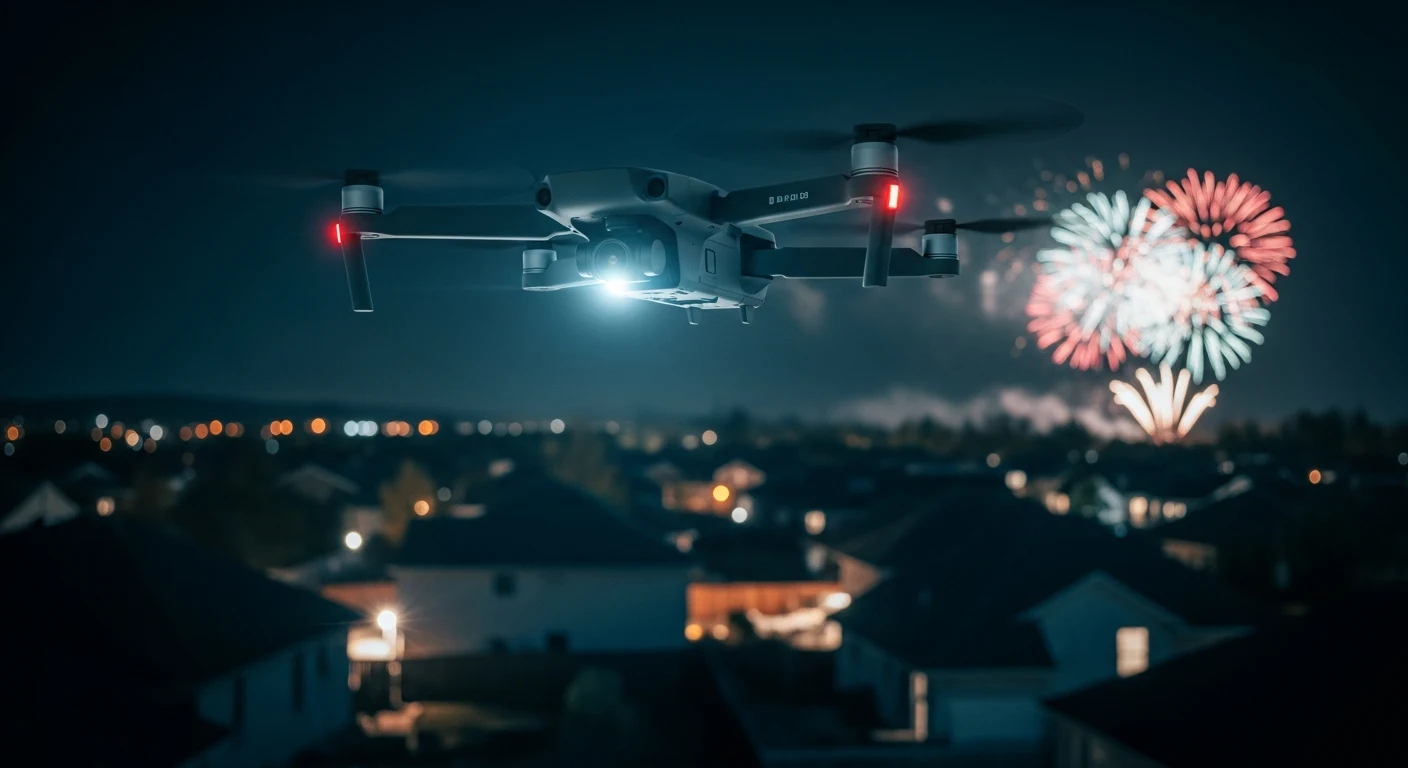
Imagine looking up at the night sky during a neighborhood celebration, admiring a burst of fireworks, completely unaware that a high-resolution camera hovering hundreds of feet above is pinpointing your exact GPS coordinates. For some residents, the realization only comes when a massive fine arrives in the mail.
Across the United States, particularly highlighted during the nation's 250th Independence Day celebrations, local governments have increasingly turned to the skies to police their own neighborhoods. In a striking example of this new enforcement era, the Sacramento Fire Department in Northern California deployed a fleet of drones that ultimately led to a staggering $100,000 fine for illegal fireworks.
The mechanics behind this aerial crackdown are as simple as they are effective. Drones patrol the skies, capturing high-resolution video of unauthorized fireworks displays. Investigators then take this bird's-eye footage and cross-reference it with tools like Google Maps. This allows them to bypass the traditional, time-consuming process of knocking on doors and instead track a launch site directly to a specific backyard or driveway.
For first responders, the shift is a necessary evolution. Illegal fireworks are more than just a nuisance; they are responsible for costly property fires, severe injuries, and even deaths every year, alongside significant air and noise pollution. By utilizing drones, police and fire departments are moving from a reactive model—waiting for 911 calls to flood in—to a proactive surveillance strategy. Many departments are even leaning into the dystopian aesthetic, posting their drone surveillance videos on social media to send a clear message: the skies are watching, and you will be caught.
Yet, this rapid adoption of municipal drone surveillance forces a broader conversation about the boundaries of domestic privacy. While the immediate goal is undeniably to protect public safety and prevent deadly fires, the normalization of high-resolution cameras floating over residential neighborhoods sets a powerful precedent. It blurs the line between public airspace and private property.
As local emergency departments continue to upgrade their technological arsenals, communities are left to navigate a new reality. The question is no longer whether drones can effectively police our neighborhoods, but rather how comfortable we are living under a permanently watchful sky.
Key Points
- US cities are increasingly relying on drone fleets to monitor and deter illegal fireworks during major holidays.
- A recent deployment by the Sacramento Fire Department resulted in a $100,000 fine after drone footage was matched with Google Maps.
- Emergency responders are actively posting surveillance videos on social media to warn residents that they are being watched.
- The trend highlights a growing tension between efficient, proactive public safety measures and the expectation of privacy in residential backyards.
Why It Matters
The integration of high-resolution drone surveillance into routine local enforcement signals a major shift in urban governance, turning private backyards into easily monitorable spaces and redefining modern privacy.
Sources:
更多专栏

Taking the Wheel: How Facebook Wants You to Train Its Algorithm
Imagine being at a party where the DJ is locked in a soundproof booth. They watc...

The AI Detective: How OpenAI Caught an Insider Threat
Corporate espionage usually conjures images of hidden cameras, shadowy informant...

Your App Store is Becoming a Personal AI Concierge
For over a decade, app stores have functioned like massive, somewhat rigid digit...