Musk vs. Altman: The Battle for AI's Soul and Billions
The future of artificial intelligence, and perhaps its very soul, is currently being debated not in a lab, but in a courtroom. A high-stakes legal battle...
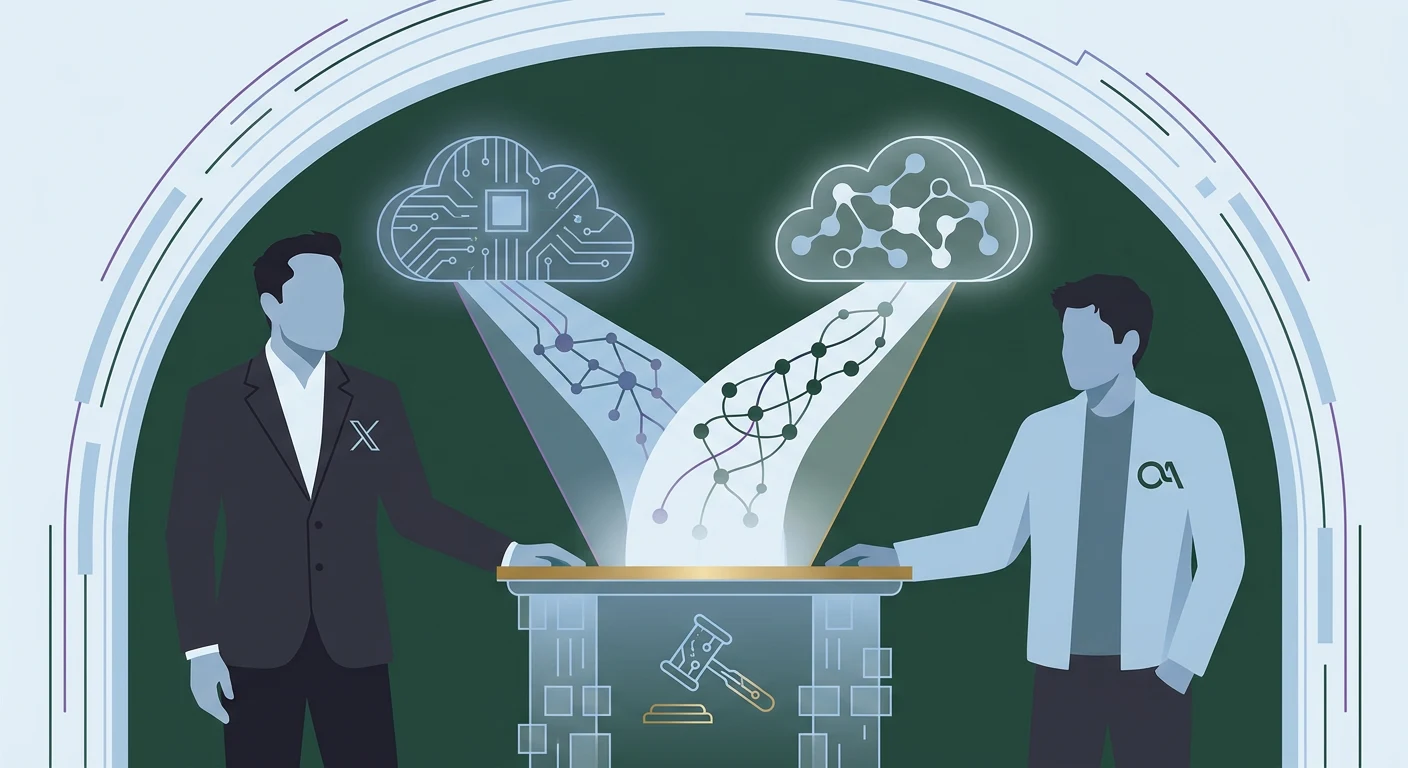
The future of artificial intelligence, and perhaps its very soul, is currently being debated not in a lab, but in a courtroom. A high-stakes legal battle between Elon Musk and Sam Altman, CEO of OpenAI, has thrown a spotlight on the fundamental tension between AI’s philanthropic origins and its rapidly commercializing future. The core of the dispute revolves around whether OpenAI has strayed from its original mission to develop artificial general intelligence (AGI) for the benefit of humanity, as a nonprofit entity.
Musk, a co-founder of OpenAI, alleges that Altman and the company abandoned their initial commitment, transforming into a profit-driven venture. He claims to have discovered this "bait and switch" in 2022, following Microsoft's substantial $10 billion investment which valued OpenAI at an estimated $20 billion. Musk is now seeking to undo OpenAI's 2025 restructuring, remove Altman and President Greg Brockman from their positions, and is demanding $134 billion in damages to be awarded to OpenAI's nonprofit arm.
OpenAI and Altman, however, present a starkly different narrative. Their legal team argues that no explicit promise was ever made to Musk to keep OpenAI solely a nonprofit. They contend that Musk's lawsuit is a calculated move to undermine a competitor, referring to his own AI company, xAI. Furthermore, OpenAI highlighted that Musk himself had sought to gain control over a for-profit subsidiary within OpenAI back in 2017, suggesting his current stance might be driven by competitive rather than purely altruistic motives.
The courtroom proceedings have seen both sides aggressively challenge each other's credibility. Altman faced scrutiny over alleged past instances of dishonesty, reportedly testified to by former OpenAI executives, and potential conflicts of interest stemming from his personal investments, such as in the nuclear energy company Helion Energy. Conversely, OpenAI painted Musk as a "power-seeker" who, in 2017, allegedly suggested that control of OpenAI should pass to his children upon his death, an anecdote used to counter his claims of advocating for AI safety for humanity.
As the jury deliberates on an advisory verdict, the outcome of this legal showdown carries immense implications. Beyond the personal fortunes and reputations of two of the tech world's most influential figures, the ruling could significantly impact OpenAI's potential IPO, which is reportedly aiming for a valuation approaching $1 trillion. More broadly, this case forces us to confront critical questions about the governance of powerful AI, the balance between innovation and ethics, and whether the pursuit of AGI will ultimately serve the collective good or be shaped by commercial interests.
Key Points
- Elon Musk accuses OpenAI of abandoning its nonprofit mission for profit, calling it a 'bait and switch'.
- Sam Altman and OpenAI deny any promise of perpetual nonprofit status, suggesting Musk's lawsuit is anti-competitive.
- Both leaders' credibility has been challenged in court, with accusations of dishonesty and conflicting motives.
- Musk seeks to reverse OpenAI's restructuring, remove its leadership, and claim $134 billion in damages.
- The trial's outcome could profoundly affect OpenAI's IPO and the broader ethical and commercial direction of AI development.
Why It Matters
This lawsuit transcends a personal feud, highlighting crucial debates about AI's governance, the balance between profit and public benefit, and how humanity will steer the development of powerful artificial intelligence.
Sources:
- Musk v. Altman week 3: Musk and Altman traded blows over each other’s credibility. Now the jury will pick a side. — MIT Technology Review - AI
更多专栏

The Cryptographer's Warning: AI and the Speed of Surprise
Imagine waking up to a digital world where secure communication is mathematicall...

The Skyward Shift: Meet the Drone Traffic Controllers
When we imagine the impact of artificial intelligence on the job market, the nar...

The End of the AI Black Box
Imagine buying a high-performance car with the hood welded shut. You can drive i...