The Dirty Secret of Smart Farming: Why AI Needs Better Data
When Silicon Valley pitches artificial intelligence to the agricultural sector, the vision is usually pristine: autonomous tractors gliding across perfectly...
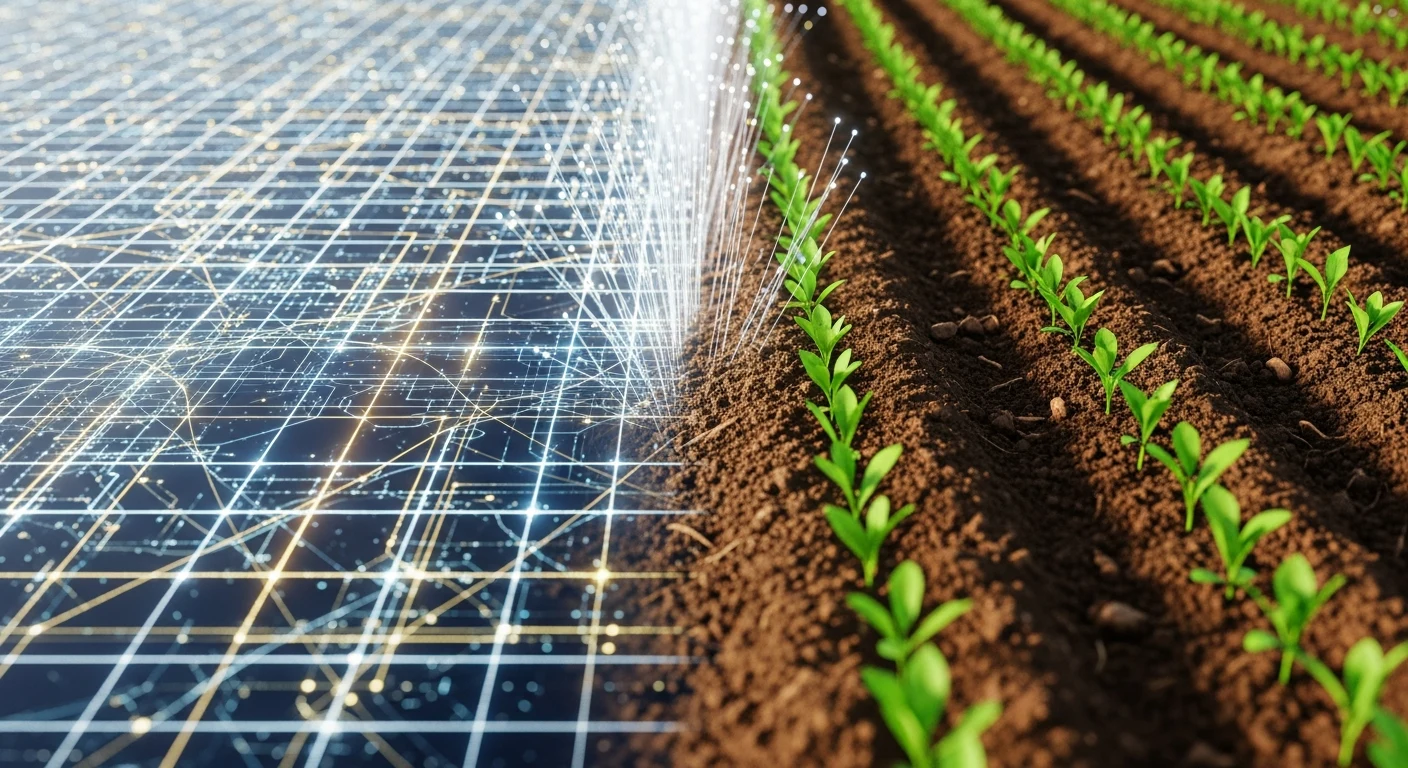
When Silicon Valley pitches artificial intelligence to the agricultural sector, the vision is usually pristine: autonomous tractors gliding across perfectly optimized fields, while algorithms calculate the exact drop of water needed for a record-breaking harvest. The statistics certainly back up the hype. Research indicates that AI-enabled predictive models can boost crop yields by 26%, slash water usage by 41%, and reduce chemical application by a third. For an industry squeezed by volatile fertilizer costs and unpredictable weather patterns, these numbers are irresistible.
Yet, there is a dirty secret behind this high-tech agricultural revolution: AI is completely dependent on data, and farm data is historically a disorganized mess.
Technology vendors rarely highlight the risks of deploying AI on a shaky data foundation. In a corporate office, an AI "hallucination" might result in a poorly worded memo. Out in the fields, the stakes are physical, financial, and environmental. If a precision irrigation system makes decisions based on fragmented or outdated sensor readings, it can waste thousands of gallons of water rather than conserving it. If a yield prediction model is fed inconsistent historical data, it might prompt a farmer to make disastrous planting choices. Because agriculture involves the heavy use of chemicals and fertilizers, a bad algorithmic recommendation isn't just a digital error—it's a massive real-world liability.
The challenge lies in the sheer complexity of the agricultural environment. A modern farm isn't a standardized factory floor. It generates a chaotic symphony of data from internet-connected soil sensors, drone imagery, autonomous machinery, live weather feeds, and macro-level data from agencies like the USDA. Furthermore, AI systems must understand deep spatial nuances. A single property has distinct farm boundaries, varying GPS coordinates, and micro-variations in soil health. An algorithm that treats a 500-acre farm as one uniform block will inevitably produce damaging recommendations.
To make AI work, the industry has to focus on the deeply unglamorous task of data governance. Take Wilbur-Ellis, a 104-year-old family-owned agricultural distributor. Before they could leverage next-generation AI, they had to untangle decades of siloed information—connecting customer profiles, field data, supplier inputs, and historical pricing into one unified system. This is where data platforms like Reltio step in, building what they call a "context intelligence layer" to synthesize disparate data streams into a coherent picture that an AI can actually trust.
Ultimately, the future of smart farming won't be won by the company with the flashiest algorithm. It will be won by those willing to do the tedious work of organizing their data long before the AI ever boots up.
Key Points
- AI models can theoretically increase crop yields by 26% and reduce water and chemical usage significantly.
- Agricultural AI often fails because it is trained on fragmented, inconsistent, or outdated data.
- Unlike digital tasks, AI errors in farming carry severe physical consequences, such as resource waste and chemical mismanagement.
- Modern farms generate highly complex data from IoT, drones, and weather feeds, requiring precise spatial understanding.
- Successful AI deployment requires robust data governance to unify siloed systems, as demonstrated by century-old distributor Wilbur-Ellis.
Why It Matters
Understanding the data bottlenecks in agricultural AI highlights a universal truth for enterprise tech: sophisticated algorithms are useless—and potentially dangerous—without a clean, well-governed data foundation.
Sources:
- Agriculture is ready for AI, but its data isn’t — MIT Technology Review - AI
更多专栏

AI Engineers Microscopic Scissors to Slice Disease-Causing Proteins
The chemical bonds that hold proteins together are remarkably stubborn. Left in ...

The Blank Text Box That Enabled AI Surveillance
When we think of artificial intelligence and privacy, our minds often jump to fa...

Who Inherits Your Secrets When an AI Company Goes Bankrupt?
When a beloved neighborhood bakery closes, they might sell their ovens, display ...