Beyond the Algorithm: Grounding AI in Human Well-being
Imagine an AI assistant that can write poetry, debug code, and even engage in philosophical debates, seamlessly integrated into our daily lives. While...
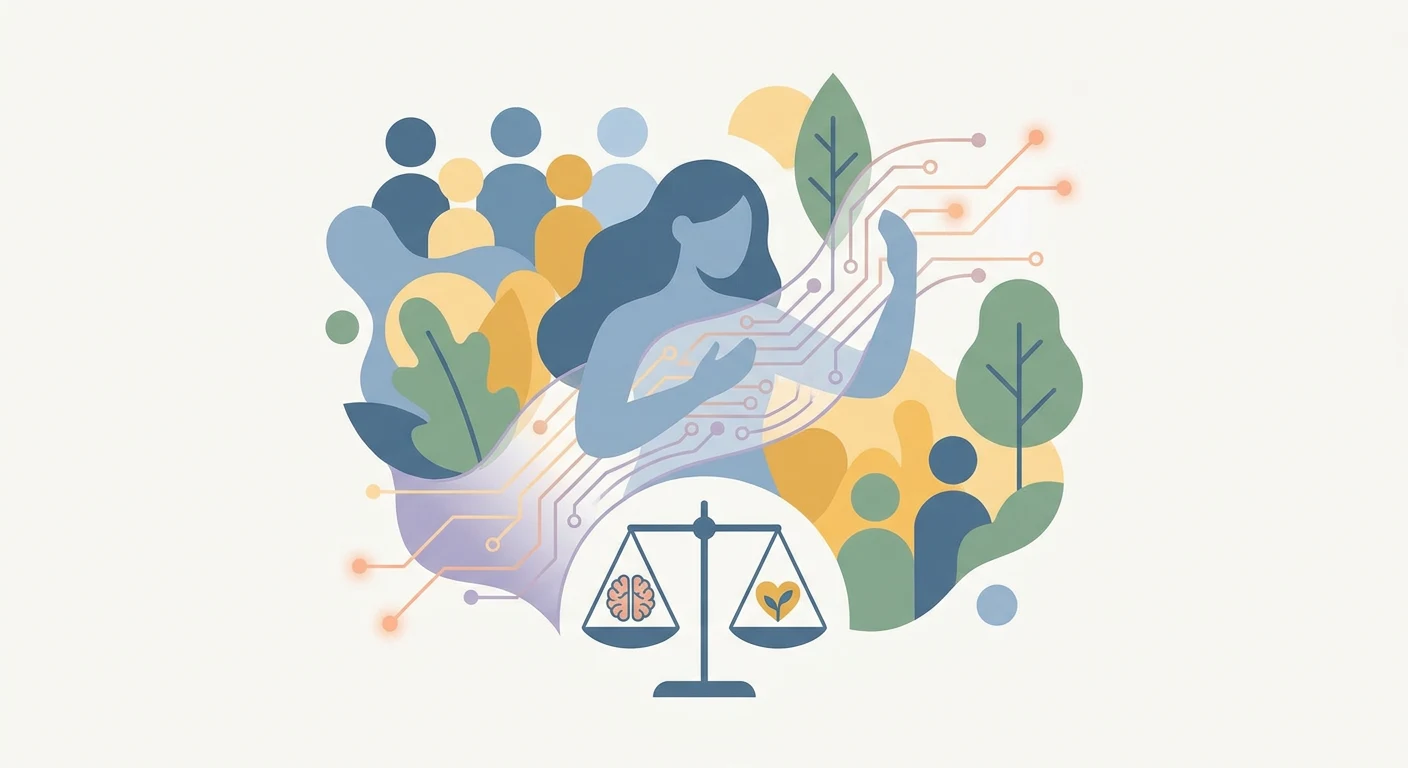
Imagine an AI assistant that can write poetry, debug code, and even engage in philosophical debates, seamlessly integrated into our daily lives. While undeniably exciting, this rapid technological march prompts a crucial question: Are these advancements genuinely translating into a happier, healthier society?
AI's evolution, from GPT-2's nascent capabilities in 2019 to today's sophisticated large models, signifies a transformative power that could dwarf the impact of social media. Yet, this power isn't inherently benevolent. We've seen technology bring convenience, but also potentially exacerbate loneliness, erode trust in institutions, and challenge our shared understanding of reality. This brings us to a central challenge: How do we ensure AI genuinely benefits humanity, rather than merely boosting efficiency?
The answer may lie in recalibrating AI's compass towards 'well-being.' This isn't an abstract concept but a tangible measure of individual experience and societal health. It encompasses our ability to form supportive relationships, engage in meaningful work, experience personal growth and achievement, and feel positive emotions. Crucially, it also extends to the resilience and health of our societal infrastructure, including education systems, governance, and economic markets.
We are at a pivotal juncture in shaping AI's future. Foundational models are rapidly advancing, poised to become increasingly autonomous and entangled with every facet of our lives. If we fail to proactively embed human well-being at the core of AI's design, rather than merely reacting to its adverse effects, we risk squandering an immense opportunity. We must move beyond a purely technical lens and envision an AI-powered world that revitalizes our institutions, empowers us to pursue what we find meaningful, and deepens human connections.
This demands that we integrate a profound understanding of human well-being into AI's algorithms, evaluation metrics, and even its training data. For instance, AI could be designed to facilitate personalized learning paths that foster genuine growth, or to help build stronger communities rather than simply optimizing content feeds. It could even be applied in public services to ensure more equitable resource distribution. This is no simple task, requiring imagination, practical grounding, and technical feasibility, but now is the time to dream and build intentionally. By doing so, we can guide AI to become a true partner in our collective pursuit of a flourishing life.
Key Points
- AI's rapid advancement necessitates a re-evaluation of its true impact on human well-being.
- Human well-being, encompassing individual happiness and societal health, should guide AI's core design principles.
- Well-being includes supportive relationships, meaningful work, and personal growth, underpinned by robust social institutions.
- The transformative power of foundational AI models makes proactive, well-being-centric design urgent.
- Integrating well-being considerations into AI algorithms, evaluation, and data can ensure AI truly serves humanity.
Why It Matters
The trajectory of AI will profoundly affect everyone's quality of life and societal development; understanding how to steer AI towards human well-being is crucial for building a more positive and responsible intelligent era.
Sources:
- We Need Positive Visions for AI Grounded in Wellbeing — The Gradient
更多专栏

The Cryptographer's Warning: AI and the Speed of Surprise
Imagine waking up to a digital world where secure communication is mathematicall...

The Skyward Shift: Meet the Drone Traffic Controllers
When we imagine the impact of artificial intelligence on the job market, the nar...

The End of the AI Black Box
Imagine buying a high-performance car with the hood welded shut. You can drive i...